
Can Mediation Deliver Justice? Reflections from Bill Marsh
Can Mediation Deliver Justice? Reflections from Bill Marsh
Can mediation deliver justice, particularly in the aftermath of complex and deeply felt harm? In a lecture hosted by University College London, CMC Fellow Bill Marsh reflected on this question, drawing on experience from disputes including Grenfell Tower and Bosnia. The discussion explored how mediation can create space for acknowledgement, accountability and meaningful change.
REPORT BY VICTORIA HARRIS
The CMC was delighted to support an event that took place yesterday evening generously hosted by the UCL Centre for Dispute Resolution titled “Can Mediation Deliver Justice? Lessons from Grenfell Tower and Bosnia.” The lecture which emanated from an earlier presentation at the CMC conference in November, was delivered by experienced mediator and CMC Fellow Bill Marsh, who explored a powerful question at the heart of mediation: can it deliver justice?
Bill reflected on how deeply the desire for justice runs within individuals who have experienced harm, and invited us to think carefully about how we define justice. In doing so, he suggested we might distinguish between “objective justice” — the form delivered by courts — and “subjective justice,” which he described as the inherently more complex and sometimes ‘messy work’ of mediating.
In this sense, mediation is not about replicating the justice delivered by courts. Rather, Bill suggested, its potential lies in creating a process that is designed around the parties and resonates as justice for those directly involved.
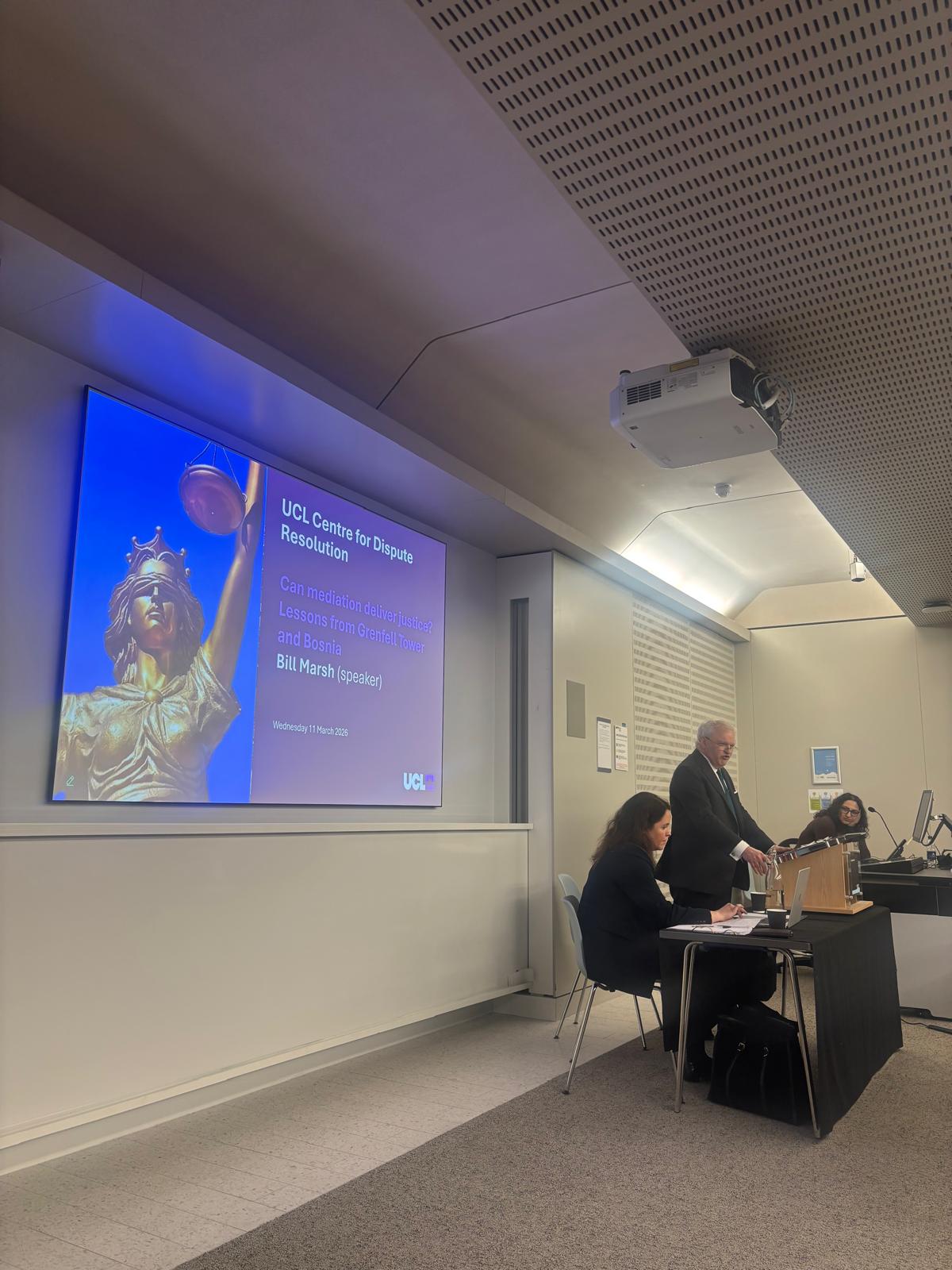
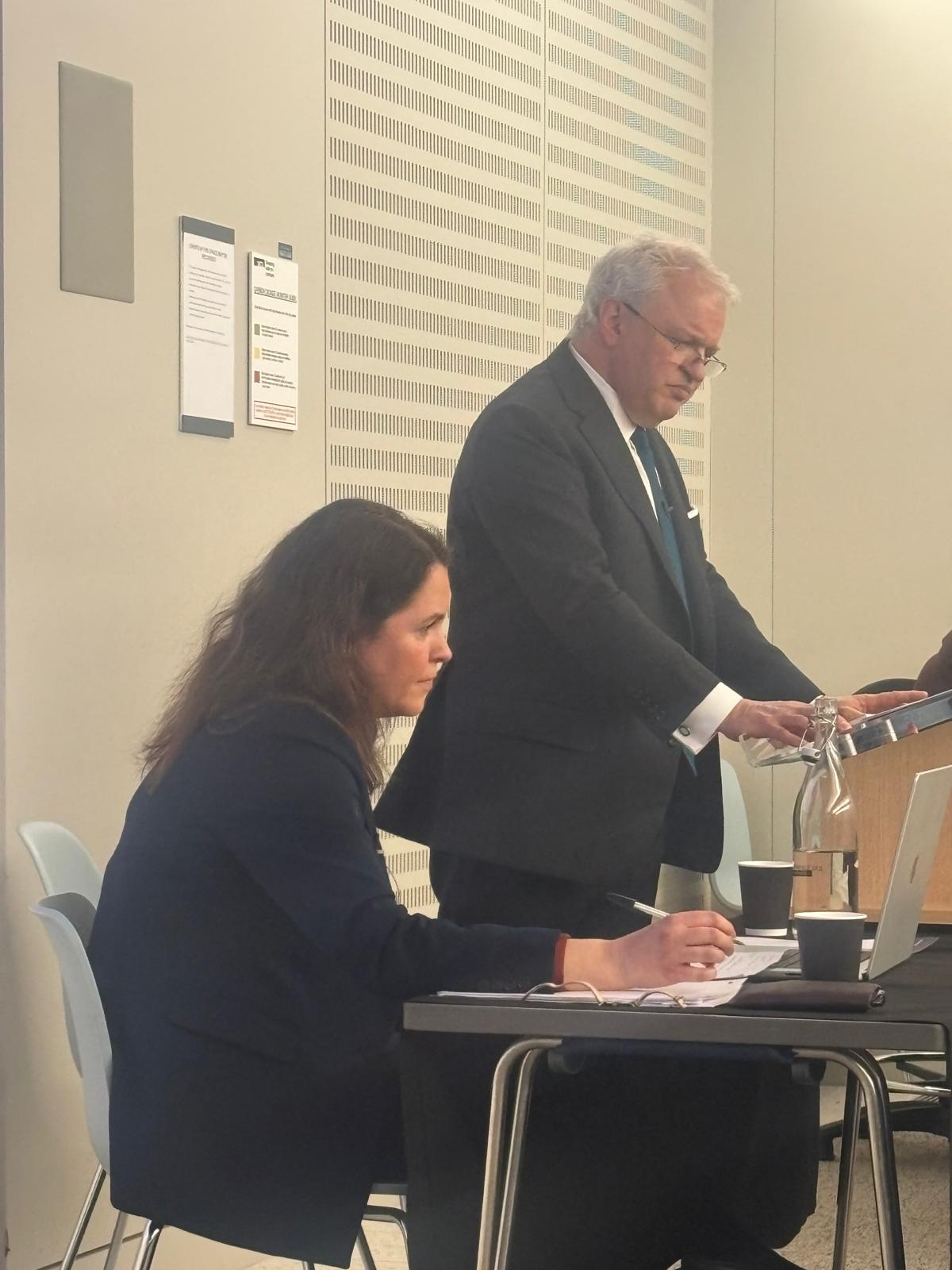
Drawing on his experience in complex and sensitive disputes, including contexts such as the Grenfell Tower disaster and claims arising from the serious impact of pollution from a factory in Bosnia, Bill shared several ways he has seen mediation help deliver a sense of justice for those affected. In particular, he highlighted how people who have been wronged often need:
• Acknowledgement of impact – the opportunity for the other party to truly understand the consequences of what happened.
• Change – a commitment that behaviour or systems will improve so the harm is not repeated.
• Accountability – the sense that responsibility is recognised and owned.
• A response – an ability to hear directly from the other party.
• A shift in power – a rebalance of the dynamic between those who felt disempowered at the time of the event and those who held power.
Bill also shared a quote from Longfellow which captured the deeper human dimension of mediation:
“If we could read the secret history of our enemies, we should find in each man’s life sorrow and suffering enough to disarm all hostility.” He used this quote to illustrate the power of mediation: that when people come to understand the hidden struggles and experiences of those they see as opponents, hostility can sometimes give way to empathy and compassion.
The discussion prompted powerful reflections on the role mediation can play — not simply in resolving disputes, but in creating space for acknowledgement, accountability, understanding and meaningful change.
Thank you to Bill Marsh for sharing his insight and experience, and to the wonderful team at UCL Faculty of Laws and the Centre for Dispute Resolution for bringing such an engaging and important conversation to a new audience.
About Bill Marsh
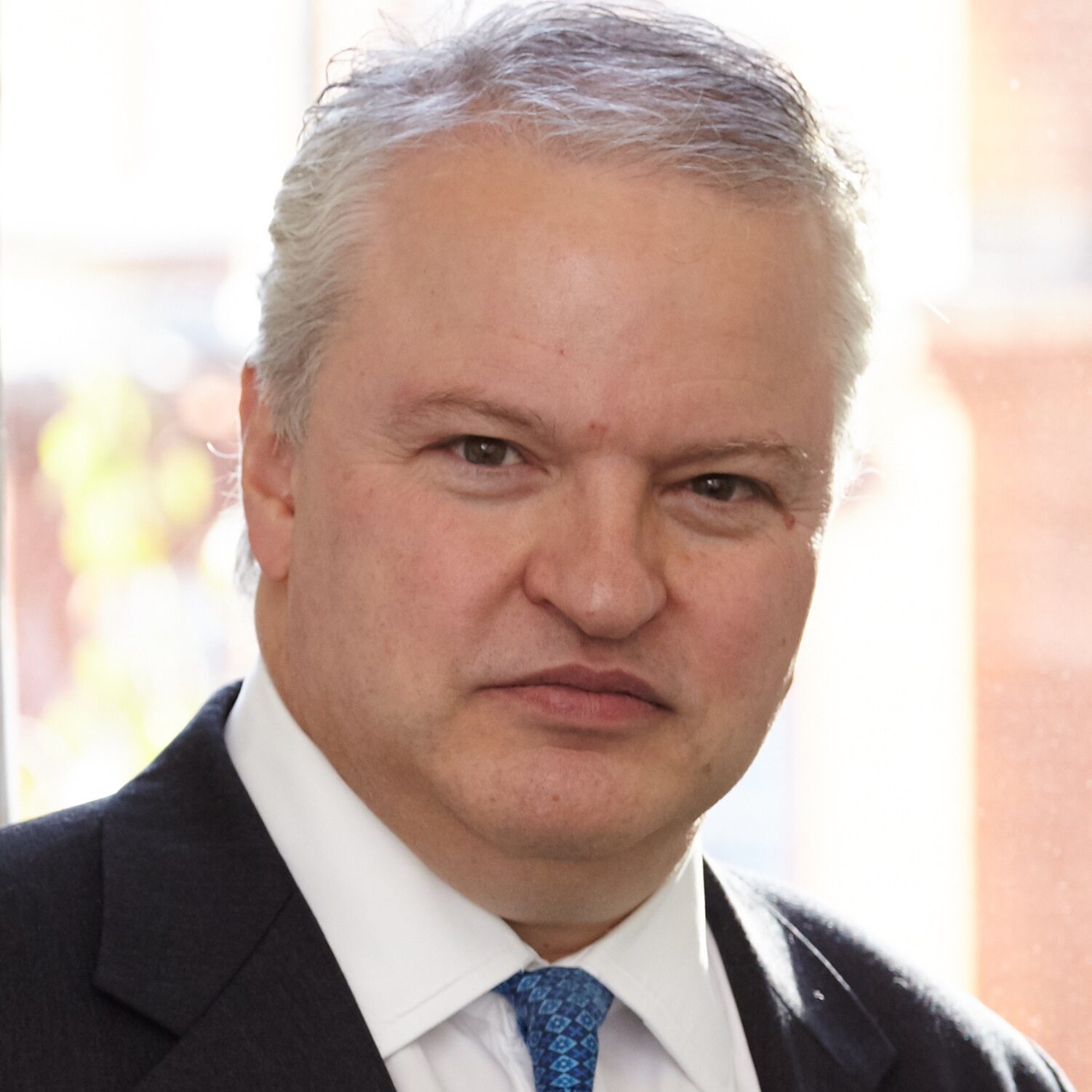
In Bill’s own words, he has “hung around the middle of other people’s fights, to see who wants to talk” for some 35 years. He mediates in commercial, civil, environmental, religious and human rights conflicts, in this country and overseas. He also trains and mentors mediators, and advises governments on mediation. He is married to Belinda, and they have three adult sons. Bill is an average but enthusiastic fly-fisherman.