
The Essential Ingredients of SEND Mediation: Safety, Sense and Slow Repair
The Essential Ingredients of SEND Mediation: Safety, Sense and Slow Repair
What does it take to mediate well in a SEND context? In this article, Nicola Cleaver draws on her experience to set out the principles and practices that underpin effective SEND mediation, from trauma-informed approaches to neurodiversity-affirming communication and the importance of treating mediation as a process rather than a single event.
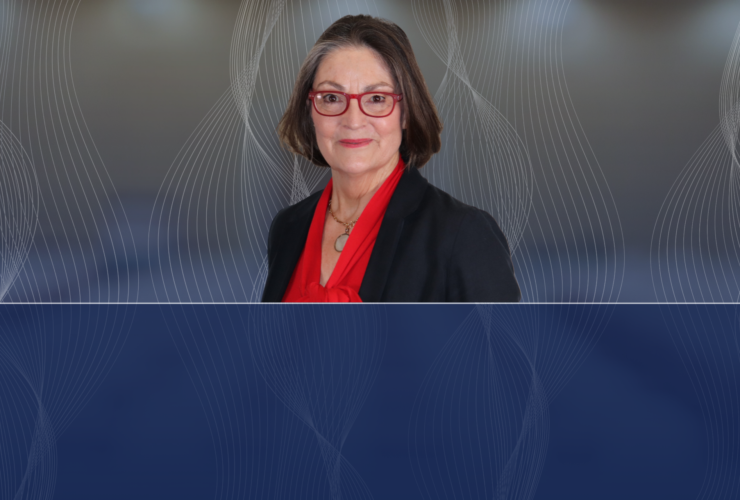
WRITTEN BY DR NICOLA CLEAVER
Mediation is often imagined as a single event, a meeting, a session, a moment in time where everything is meant to unfold neatly. But in SEND, the session is only the surface. Beneath it lies the real work: the emotional histories people carry, the systems that have shaped them, and the nervous systems already activated long before anyone joins the call. Mediation is not an appointment. It is a process, a slow, layered journey of safety, regulation and repair.
Families rarely arrive in a calm, reflective state. They come with months or years of strain, fear and exhaustion. The trauma experienced by those families, children and young is easily described through the ‘The Linen Cupboard’ analogy. Imagine a cupboard, already bulging, every cancelled meeting, every dismissal, every unanswered email, unreturned call, every argument and broken relationship, every detention or exclusion stuffed inside until the doors strain against the pressure of it all. Every now and again when you walk past it, the doors creek open and something falls out, you quickly stuff it back in, slam the door shut and run, you might even start to avoid walking past it altogether. However, when the inevitable happens and the hinges finally give way everything spills out at once and control is lost. Fight, Flight, Freeze or Fawn responses are not dramatic metaphors; they are the lived reality of people whose “downstairs brain” has taken over, leaving the logical “upstairs brain” temporarily offline. Communication falters not through unwillingness, but through overwhelm.
Mediation is not an appointment. It is a process, a slow, layered journey of safety, regulation and repair.
This is why mediation cannot begin in the session. It begins in the quiet, early conversations where anxiety softens, power is gently rebalanced, and safety begins to take shape. These early stages are not administrative preliminaries; they are the intervention. They are where the nervous system settles enough for reasoning to return. They are where people begin to feel they will not be judged or rushed. They are where the mediator becomes a steadying presence, modelling calm, offering predictability, and creating the conditions for meaningful participation.
Reflective practice is essential here. Every mediator carries assumptions and unconscious biases that, if unexamined, can quietly shape the process they’re chairing. Curiosity must replace judgement. Reflection for us is not self indulgence; it is ethical discipline, the safeguard that prevents the mediator from replicating the very dynamics that have harmed families elsewhere.

Neurodiversity affirming practice is another vital ingredient. Many adults in SEND mediation are neurodivergent themselves, and their communication needs matter. Some need explicit, unambiguous language. Others need predictable structures, written summaries or time to process. ADHD related executive function challenges mean that strategies like ‘dopamine stacking’, where we break tasks down into small, achievable steps with immediate feedback, can make the difference between participation and overwhelm. Sensory sensitivities may require adjustments to lighting, noise or visual clutter. These are not just reasonable adjustments; they are acts of respect.
Trauma informed practice weaves through every stage of our process. Trauma affects memory, sequencing, language and regulation. It can cause people to shut down or become flooded with emotion. Trauma informed mediation assumes that trust must be earned, not expected. Safety, transparency, collaboration, empowerment and cultural awareness are not optional extras. They are the foundation that allows people to stay present long enough to participate meaningfully.
When these ingredients come together, something transformative becomes possible.
When these ingredients come together, safety, reflection, neurodiversity affirming communication, trauma informed approaches, and an understanding of mediation as a process, something transformative becomes possible. People begin to take the pieces out of the linen cupboard one at a time. They examine them, name them, fold them, and place them back with intention. Even the tatty old socks with holes that they felt had no value previously. In doing so, they build emotional resilience not just to survive the process, but to grow through it. They begin to think in a forward focussed way again. They begin to feel capable, resourceful and empowered.
This is the quiet power of mediation when it is treated as a process rather than an event. It becomes a space where people are not only heard but strengthened. Where the child or young persons story is not only told but honoured. Where the system is not only challenged but humanised. The agreement matters, but the transformation matters more.
Mediation is not a meeting. It is a journey of safety, sense making and slow repair. And when we honour it as such, we create the conditions for genuine participation, authentic communication and outcomes that reflect calm and considered collaboration.
Nicola Cleaver is a mediator and Senior Leadership Team member at Collis Mediation Ltd, one of the CMC’s accredited SEND Mediation Service Providers and an approved provider for cases referred through the Ministry of Justice.
Collis Mediation is also the Headline Sponsor of the CMC Conference 2026, Making Mediation Mainstream, taking place online on 7 and 8 October.
The CMC is also pleased to announce the launch of a new membership category, the CMC SEND Mediation Service Provider, open to organisations providing SEND mediation services. Find out more about the new membership.

Nicola Cleaver is a former criminal lawyer with a PhD in Social Sciences who now specialises in SEND mediation and disagreement resolution. She has extensive experience managing complex tribunal appeals and delivers CMC-accredited SEND training courses across the UK. As both a SEND professional and parent, she brings unique insight into the challenges families face when navigating statutory processes. Nicola has also trained with the National Autistic Society and NHS on autism, ADHD and communication disorders, and is a UK Registered Expert Witness in SEND as well as a member of the Civil Mediation Council, College of Mediators, CiLEX, Restorative Justice Council and Neurodiversity in Law.
Connect with Nicola on LinkedIn.