From Law to Mediation: Reflections from the UEL Symposium on Justice and Dispute Resolution
From Law to Mediation: Reflections from the UEL Symposium on Justice and Dispute Resolution
What does justice really look like? It is a question that sits at the heart of mediation, and one that Victoria Harris, CEO of the Civil Mediation Council, explored in her keynote address at the University of East London’s recent symposium, From Law to Mediation. Here, she shares some reflections on the conversation and what it means for the future of dispute resolution.
WRITTEN BY VICTORIA HARRIS
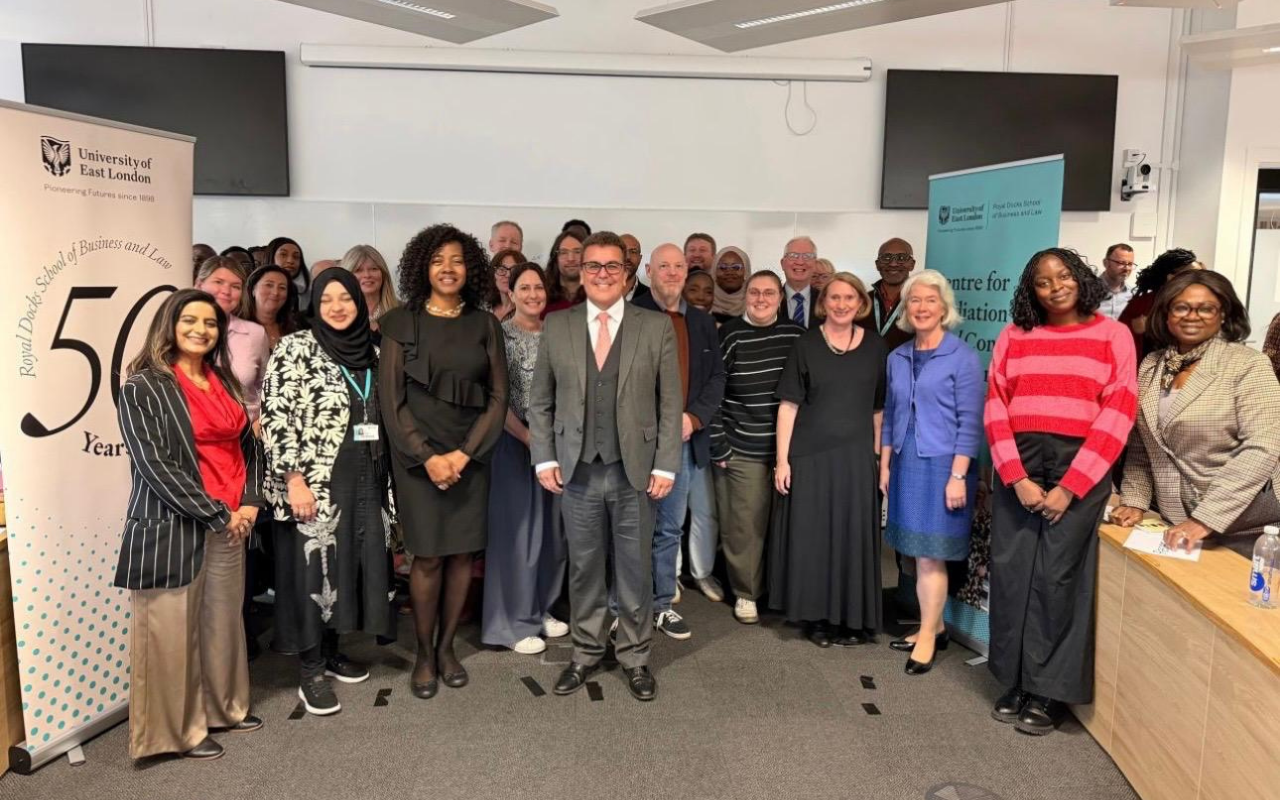
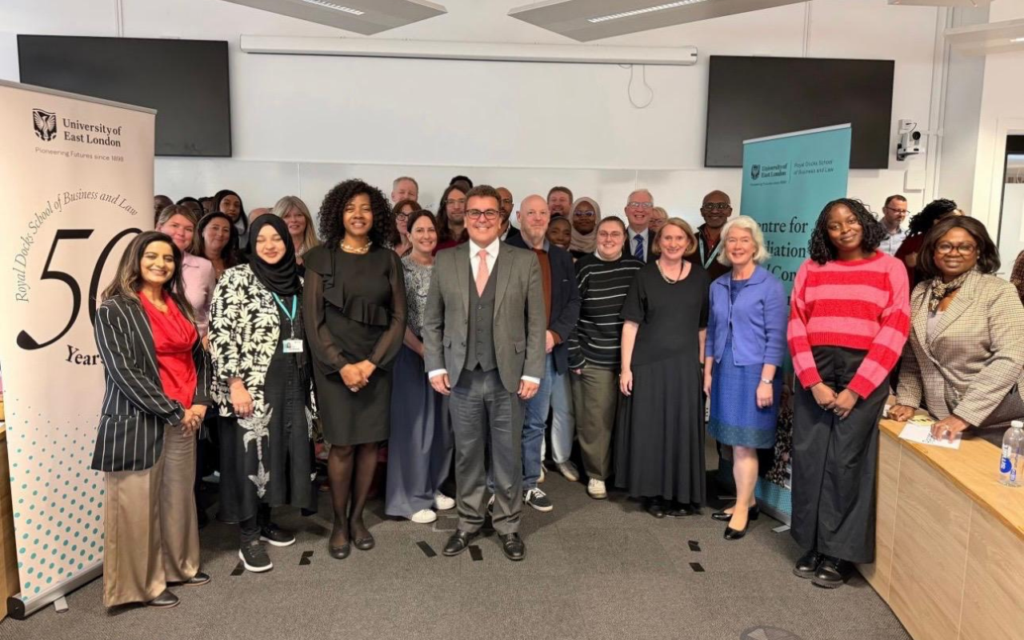
It was a real privilege to deliver the keynote speech on 23 April at the University of East London’s symposium, “From Law to Mediation,” marking the close of their 50-years of Law celebrations.
The event brought together voices from across law and mediation to explore the growing role of mediation and what that means for the future of dispute resolution. It was an important and timely conversation.
In my keynote, I reflected on both a personal journey from law to mediation and the broader journey of the civil justice system itself. Over time, I’ve seen mediation work in so many different settings: courts, workplaces, communities, and schools. I’ve seen what happens when people are given the space and support to resolve conflict differently.
And it continues to raise a fundamental question: what does justice really look like?
The traditional legal model plays a vital role. It provides structure, clarity, and certainty. But in practice, many disputes are about more than what can be formally defined and proven. Beneath the surface, there are often deeper issues that matter just as much, if not more, to the people involved.
That’s where mediation has such a powerful role to play.
What’s particularly encouraging is that this is no longer just a conceptual shift. We are seeing real, tangible change. Mediation is becoming increasingly embedded within the justice system and that progress is being driven not by chance, but by design.
With ongoing challenges such as court backlogs, mediation also has a clear role in improving both efficiency and access to justice.
Looking ahead, I shared four themes that I believe will shape the future of mediation:
• Earlier resolution
• Greater integration within court and tribunal systems
• The thoughtful use of technology as an enabler
• And, perhaps most importantly, a cultural shift in how we understand and approach conflict
But what stood out most yesterday was the work being done by the University of East London.
UEL has taken a genuinely forward-thinking step by embedding mediation into its student offer by designing a CMC registered mediation training programme, the first university in London to do so. That is a significant milestone.
It signals something important: mediation is no longer an “add-on” to legal education. It is becoming part of the foundation.
For the next generation of students, mediation will not be seen as separate or alternative but as an integral part of how justice is delivered.
Congratulations to everyone at UEL involved in making this happen. This is exactly the kind of leadership that will help shape the future of dispute resolution.

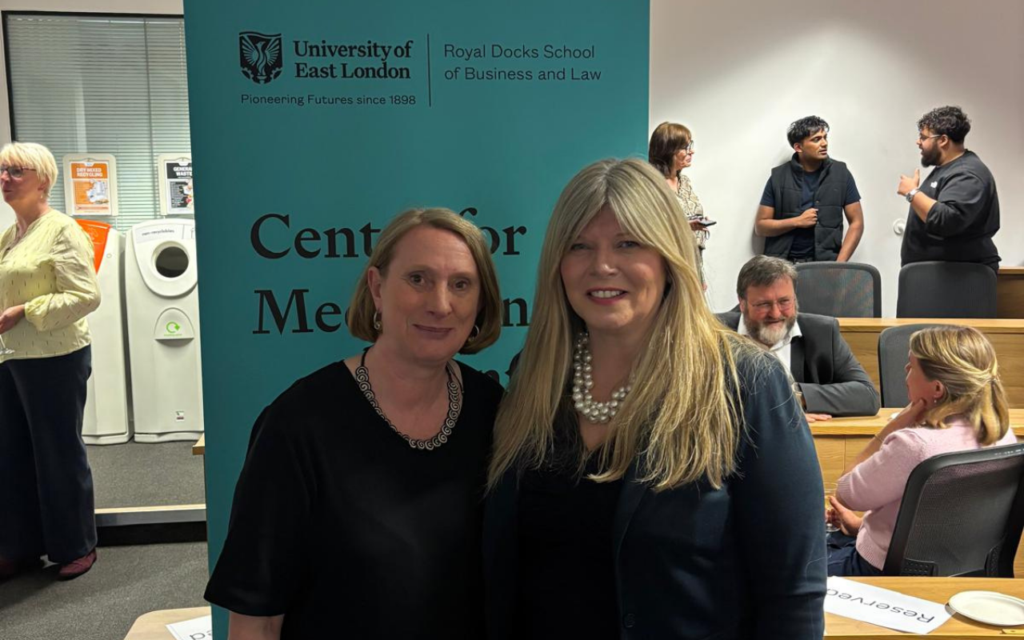
Images courtesy of the University of East London and Victoria Harris